Buy now-us.eu ?
We are moving the project
now-us.eu .
Are you interested in purchasing the domain
now-us.eu ?
domain@kv-gmbh.de · 0541-91531010
Buy now-us.eu ?
What is proton donation and proton acceptance in chemistry?
Proton donation and proton acceptance are key concepts in acid-base chemistry. Proton donation refers to the transfer of a hydrogen ion (proton) from one substance to another. This typically occurs when an acid donates a proton to a base. Proton acceptance, on the other hand, involves the acceptance of a proton by a substance, often a base, leading to the formation of a new chemical species. These processes are fundamental to understanding the behavior of acids and bases in chemical reactions. **
What is meant by proton donors and proton acceptors?
Proton donors are substances that can donate a proton (H+) to another substance. This typically involves the release of a hydrogen ion. Proton acceptors, on the other hand, are substances that can accept a proton from another substance. This typically involves the uptake of a hydrogen ion. In the context of acid-base reactions, proton donors are acids, while proton acceptors are bases. **


Similar search terms for Proton
Top-Angebote
Products related to Proton:
-
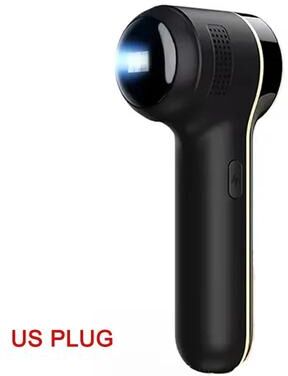
Uplift Treasures DPL Infrared Skin Rejuvenation Beauty Device With Cooling Technology us PlugProduct Description: Revitalize your skincare routine with this DPL Skin Rejuvenation Beauty Device. Featuring advanced DPL infrared light technology and an innovative cooling treatment head, it delivers a comfortable skincare experience while...325,97 $*Shipping: 0,00 $Secure redirect to the provider
-
All Categories Goods LED Solar Security Light Dual Motion Sensor Outdoor Floodlight With LED Technology For Energy Efficient Illumination LED Solar Security Light Dual Motion Sensor Outdoor Floodlight With LED Technology For Energy Efficient IlluminationBrighten your outdoor space with the 1 pcs of 22 LED Solar Security Light, designed for maximum visibility and security. Powered by ecofriendly solar energy, this motion sensor floodlight activates when movement is detected, offering both...63,97 $*Shipping: 0,00 $Secure redirect to the provider
-
Inspire Curations DPL Skin Rejuvenation Device With Infrared Light And Cooling Technology us PlugTransform your skincare routine with this Skin Rejuvenation Device that combines DPL light technology, infrared light, and a refreshing cooling treatment in one convenient beauty tool. Designed for comfortable, noninvasive use, it helps support...268,00 $*Shipping: 0,00 $Secure redirect to the provider
-
Inspired Living NanoGlow Pro Facial Steamer With Ozone & Nano Mist Technology 110v Us PlugDry, tired skin doesnt stand a chance. The NanoGlow Pro Facial Steamer transforms your daily routine into a rejuvenating face steam spa experience right at home. Designed for skincare lovers, beauty professionals, and anyone craving a deep,...158,97 $*Shipping: 0,00 $Secure redirect to the provider


-
What determines a proton donor and a proton acceptor?
A proton donor is a substance that can release a proton (H+) in a chemical reaction, while a proton acceptor is a substance that can accept a proton. This ability is determined by the presence of a hydrogen atom with a positive charge (H+) in the molecule. In general, substances with a lone pair of electrons, such as a hydroxide ion (OH-) or an amine group (NH2), can act as proton acceptors, while substances with a hydrogen atom bonded to an electronegative atom, such as a hydrochloric acid (HCl) or acetic acid (CH3COOH), can act as proton donors. **
-
Why are carboxylic acids proton donors and amines proton acceptors?
Carboxylic acids are proton donors because they contain a highly electronegative oxygen atom that can stabilize the resulting carboxylate anion by delocalizing the negative charge. Amines, on the other hand, are proton acceptors because they contain a lone pair of electrons on the nitrogen atom that can readily accept a proton to form a positively charged ammonium ion. This ability to donate or accept protons is due to the presence of functional groups in these molecules that can easily gain or lose a hydrogen ion in solution. **
-
Are there only proton-proton collisions in the particle accelerator?
No, there are not only proton-proton collisions in the particle accelerator. Particle accelerators can also collide protons with other particles such as electrons or heavy ions like lead or gold. These collisions are important for studying different aspects of particle physics and for exploring the fundamental forces and particles that make up the universe. By colliding different types of particles, scientists can gain a better understanding of the fundamental building blocks of matter and the forces that govern their interactions. **
-
How secure is Proton?
Proton is considered to be a highly secure email service. It offers end-to-end encryption for emails, meaning that only the sender and recipient can read the contents of the messages. Proton also uses strong encryption protocols to protect user data and has a strict privacy policy that ensures user information is not shared with third parties. Additionally, Proton is based in Switzerland, known for its strong privacy laws, adding an extra layer of security for users. **

What is proton decay?
Proton decay is a theoretical process in which a proton, one of the fundamental particles that make up an atom's nucleus, decays into lighter particles. This process is predicted by some grand unified theories (GUTs) that seek to unify the electromagnetic, weak, and strong nuclear forces. If proton decay were to occur, it would have profound implications for our understanding of the fundamental forces and particles in the universe. However, despite extensive experimental efforts, proton decay has not been observed, and its theoretical prediction remains unconfirmed. **
What are proton currents?
Proton currents refer to the flow of protons, which are positively charged particles, through a medium. This flow of protons can occur in various contexts, such as in biological systems, in proton-conducting materials, or in the context of proton exchange membrane fuel cells. Proton currents are important in many physiological processes, such as the generation of energy in cells through the process of oxidative phosphorylation. In the context of proton-conducting materials and fuel cells, proton currents are important for the generation of electrical energy. **
Top-Angebote
Products related to Proton:
-
Uplift Essentials Portable Ionic Facial Steamer With Nano Mist Spray Technology usTransform your skincare routine with this portable ionic facial steamer. Using advanced nano ionic technology, it produces a fine hot mist that penetrates deep into the skin, helping to moisturize, cleanse pores, and rejuvenate tired skin. Compact...163,97 $*Shipping: 0,00 $Secure redirect to the provider
-
Uplift Treasures DPL Infrared Skin Rejuvenation Device With Cooling Technology us PlugProduct Description: Elevate your skincare routine with this DPL skin rejuvenation device featuring infrared light technology and a cooling treatment mode. Designed to provide a comfortable beauty care experience, it helps support smoother,...222,97 $*Shipping: 0,00 $Secure redirect to the provider
-
Uplift Treasures DPL Infrared Skin Rejuvenation Beauty Device With Cooling Technology us PlugProduct Description: Revitalize your skincare routine with this DPL Skin Rejuvenation Beauty Device. Featuring advanced DPL infrared light technology and an innovative cooling treatment head, it delivers a comfortable skincare experience while...325,97 $*Shipping: 0,00 $Secure redirect to the provider
-
All Categories Goods LED Solar Security Light Dual Motion Sensor Outdoor Floodlight With LED Technology For Energy Efficient Illumination LED Solar Security Light Dual Motion Sensor Outdoor Floodlight With LED Technology For Energy Efficient IlluminationBrighten your outdoor space with the 1 pcs of 22 LED Solar Security Light, designed for maximum visibility and security. Powered by ecofriendly solar energy, this motion sensor floodlight activates when movement is detected, offering both...63,97 $*Shipping: 0,00 $Secure redirect to the provider
-
What is proton donation and proton acceptance in chemistry?
Proton donation and proton acceptance are key concepts in acid-base chemistry. Proton donation refers to the transfer of a hydrogen ion (proton) from one substance to another. This typically occurs when an acid donates a proton to a base. Proton acceptance, on the other hand, involves the acceptance of a proton by a substance, often a base, leading to the formation of a new chemical species. These processes are fundamental to understanding the behavior of acids and bases in chemical reactions. **
-
What is meant by proton donors and proton acceptors?
Proton donors are substances that can donate a proton (H+) to another substance. This typically involves the release of a hydrogen ion. Proton acceptors, on the other hand, are substances that can accept a proton from another substance. This typically involves the uptake of a hydrogen ion. In the context of acid-base reactions, proton donors are acids, while proton acceptors are bases. **
-
What determines a proton donor and a proton acceptor?
A proton donor is a substance that can release a proton (H+) in a chemical reaction, while a proton acceptor is a substance that can accept a proton. This ability is determined by the presence of a hydrogen atom with a positive charge (H+) in the molecule. In general, substances with a lone pair of electrons, such as a hydroxide ion (OH-) or an amine group (NH2), can act as proton acceptors, while substances with a hydrogen atom bonded to an electronegative atom, such as a hydrochloric acid (HCl) or acetic acid (CH3COOH), can act as proton donors. **
-
Why are carboxylic acids proton donors and amines proton acceptors?
Carboxylic acids are proton donors because they contain a highly electronegative oxygen atom that can stabilize the resulting carboxylate anion by delocalizing the negative charge. Amines, on the other hand, are proton acceptors because they contain a lone pair of electrons on the nitrogen atom that can readily accept a proton to form a positively charged ammonium ion. This ability to donate or accept protons is due to the presence of functional groups in these molecules that can easily gain or lose a hydrogen ion in solution. **
Similar search terms for Proton
-
Inspire Curations DPL Skin Rejuvenation Device With Infrared Light And Cooling Technology us PlugTransform your skincare routine with this Skin Rejuvenation Device that combines DPL light technology, infrared light, and a refreshing cooling treatment in one convenient beauty tool. Designed for comfortable, noninvasive use, it helps support...268,00 $*Shipping: 0,00 $Secure redirect to the provider
-
Inspired Living NanoGlow Pro Facial Steamer With Ozone & Nano Mist Technology 110v Us PlugDry, tired skin doesnt stand a chance. The NanoGlow Pro Facial Steamer transforms your daily routine into a rejuvenating face steam spa experience right at home. Designed for skincare lovers, beauty professionals, and anyone craving a deep,...158,97 $*Shipping: 0,00 $Secure redirect to the provider
-
Inspire Picks DPL Skin Rejuvenation Device With Cooling Technology LED Facial Beauty Instrument us PlugElevate your skincare routine with this skin rejuvenation device designed to provide a comfortable athome beauty care experience. Combining DPL light technology with a refreshing cooling sensation, this DPL beauty device helps make skincare sessions...309,85 $*Shipping: 0,00 $Secure redirect to the provider
-
Inspired Living LumiFreeze DPL Skin Rejuvenation Device With Infrared Light Therapy Cooling Technology us PlugExperience smoother, more radiantlooking skin from the comfort of home. This DPL Skin Rejuvenation Device combines advanced Infrared Light Therapy with an icecooling treatment surface to deliver a soothing skincare experience while helping improve...293,97 $*Shipping: 0,00 $Secure redirect to the provider
-
Are there only proton-proton collisions in the particle accelerator?
No, there are not only proton-proton collisions in the particle accelerator. Particle accelerators can also collide protons with other particles such as electrons or heavy ions like lead or gold. These collisions are important for studying different aspects of particle physics and for exploring the fundamental forces and particles that make up the universe. By colliding different types of particles, scientists can gain a better understanding of the fundamental building blocks of matter and the forces that govern their interactions. **
-
How secure is Proton?
Proton is considered to be a highly secure email service. It offers end-to-end encryption for emails, meaning that only the sender and recipient can read the contents of the messages. Proton also uses strong encryption protocols to protect user data and has a strict privacy policy that ensures user information is not shared with third parties. Additionally, Proton is based in Switzerland, known for its strong privacy laws, adding an extra layer of security for users. **
-
What is proton decay?
Proton decay is a theoretical process in which a proton, one of the fundamental particles that make up an atom's nucleus, decays into lighter particles. This process is predicted by some grand unified theories (GUTs) that seek to unify the electromagnetic, weak, and strong nuclear forces. If proton decay were to occur, it would have profound implications for our understanding of the fundamental forces and particles in the universe. However, despite extensive experimental efforts, proton decay has not been observed, and its theoretical prediction remains unconfirmed. **
-
What are proton currents?
Proton currents refer to the flow of protons, which are positively charged particles, through a medium. This flow of protons can occur in various contexts, such as in biological systems, in proton-conducting materials, or in the context of proton exchange membrane fuel cells. Proton currents are important in many physiological processes, such as the generation of energy in cells through the process of oxidative phosphorylation. In the context of proton-conducting materials and fuel cells, proton currents are important for the generation of electrical energy. **
* All prices are inclusive of VAT and, if applicable, plus shipping costs. The offer information is based on the details provided by the respective shop and is updated through automated processes. Real-time updates do not occur, so deviations can occur in individual cases. ** Note: Parts of this content were created by AI.