Buy now-us.eu ?
We are moving the project
now-us.eu .
Are you interested in purchasing the domain
now-us.eu ?
domain@kv-gmbh.de · 0541-91531010
Buy now-us.eu ?
How is efficiency related to thermal energy?
Efficiency is related to thermal energy in the context of energy conversion processes. In many systems, thermal energy is used to produce work or electricity. The efficiency of these systems is a measure of how much of the thermal energy input is converted into useful work or electricity. Higher efficiency means that more of the thermal energy is being effectively utilized, while lower efficiency indicates that more of the thermal energy is being wasted as heat. **
How is the efficiency related to thermal energy?
Efficiency is related to thermal energy in the context of energy conversion processes. The efficiency of a system or process is a measure of how much useful work or energy output is obtained compared to the total energy input. In the context of thermal energy, the efficiency of a system such as a power plant or an engine is a measure of how effectively it can convert thermal energy into useful work. Higher efficiency means that a greater proportion of the thermal energy input is being converted into useful work, while lower efficiency means that more of the thermal energy is being wasted as heat. Therefore, the relationship between efficiency and thermal energy is crucial in determining the overall performance and effectiveness of energy conversion processes. **

Similar search terms for Thermal
Top-Angebote
Products related to Thermal:
-
DeLonghi TrueBrew Automatic Drip Coffee Maker with Thermal Carafe, Built-In Grinder, and Bean Extract Technology Stainless SteelThe DeLonghi TrueBrew is an innovative, automatic coffee machine that brews drip coffee from fresh, whole coffee beans, all at the touch of a button. TrueBrew is built to suit your coffee needs for consistent, freshly ground coffee every time.699,95 $*Shipping: 0,00 $Secure redirect to the provider
-
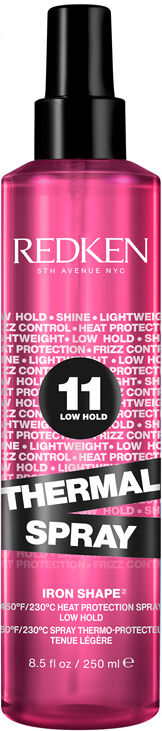
Redken Thermal Spray 250mlRedken Thermal Spray protects and repairs hair from thermal damage. Key Benefits: Heat protection 230°C 24 hour frizz protection Increased shine Bottle made from recycled plastic (excluding pump and cap) With a lightweight formula, this heat protector protects hair from up to 230°C and is suitable for all hair types. Frizz is reduced and hair is left with a glossy shine for that salon-fresh finish from root to tip. Formulated with Redken’s Heat Re-Style technology, this protecting mist can be applied once and still allow for endless re-styling throughout the day. Ingredients: Aqua / water • Isobutane • Propylene Glycol • Sodium Polystyrene Sulfonate • Carbomer • Triethanolamine • Phenoxyethanol • Peg-40 Hydrogenated castor oil • Parfum / fragrance • Peg-60 Almond Glycerides • Polysorbate 20 • Cocamidopropyl Betaine • Benzophenone-4 • Glyceryl Laurate • Sodium Chloride • Hydroxypropyltrimonium Hydrolyzed Wheat Protein • Glycerin • Alpha-isomethyl Ionone • Xylose • Linalool • Hydroxycitronellal • Hexyl Cinnamal • Citronellol • Sodium Benzoate • Geraniol • Limonene • Benzyl Alcohol • Isoeugenol20,40 £*Shipping: 0,00 £Secure redirect to the provider


-
What efficiency does a thermal power plant have?
A thermal power plant typically has an efficiency ranging from 30% to 40%. This means that only 30-40% of the energy from the fuel is converted into electricity, while the rest is lost as waste heat. Improving the efficiency of thermal power plants is a key focus for reducing greenhouse gas emissions and increasing energy sustainability. Various technologies and strategies, such as combined heat and power systems, can help increase the efficiency of thermal power plants. **
-
What is the efficiency of a thermal power plant?
The efficiency of a thermal power plant refers to the ratio of the electrical energy output to the heat energy input. It is a measure of how effectively the plant converts heat energy into electrical energy. A higher efficiency means that the plant is able to generate more electricity with the same amount of fuel, resulting in lower fuel consumption and reduced environmental impact. Improving the efficiency of thermal power plants is an important goal for reducing greenhouse gas emissions and increasing energy sustainability. **
-
How do you calculate the efficiency of thermal energy?
The efficiency of thermal energy can be calculated by dividing the useful output of energy (such as work or electricity) by the total input of energy. This can be expressed as a percentage by multiplying the result by 100. For example, if a power plant converts 40% of the thermal energy from burning coal into electricity, the efficiency of thermal energy conversion would be 40%. This calculation helps to assess how effectively thermal energy is being converted into useful forms of energy. **
-
Can someone help us with solar thermal energy?
Yes, there are professionals and experts in the field of solar thermal energy who can help with various aspects of the technology. These experts can provide guidance on system design, installation, maintenance, and troubleshooting. Additionally, there are many resources available, such as workshops, training programs, and online forums, where individuals can seek assistance and advice on solar thermal energy. Whether it's for residential, commercial, or industrial applications, there are professionals who can help with harnessing the power of solar thermal energy. **


Among which thermal pads is thermal paste used?
Thermal paste is typically used between the CPU and the heatsink to improve heat transfer. It is not used with thermal pads, as thermal pads are pre-applied or placed between components where a more solid interface is needed. Thermal paste is a better choice for areas where there are small gaps or uneven surfaces that need to be filled for optimal heat dissipation. **
What is the difference between thermal energy and thermal power?
Thermal energy refers to the internal energy present in a system due to the motion and interaction of its particles. It is a measure of the total kinetic and potential energy of the particles in a substance. On the other hand, thermal power refers to the rate at which thermal energy is transferred or converted into other forms of energy, such as mechanical or electrical energy. It is a measure of the amount of thermal energy transferred per unit of time. In summary, thermal energy is the total energy present in a system, while thermal power is the rate at which thermal energy is transferred or converted. **
Top-Angebote
Products related to Thermal:
-
Ring Battery Video Doorbell Pro – Advanced Home Security & Connectivity, NewUpgrade your home security with the Ring Battery Video Doorbell Pro – Wireless Video Doorbell Security Camera . Designed to give you peace of mind, it delivers a head-to-toe 1536p HD view so you can see every detail clearly, from visitors to parcels at your doorstep. With advanced 3D Motion Detection and Bird’s Eye View , you’ll always know what’s happening around your home. The built-in colour night vision ensures crisp images even in the dark, while the wire-free battery design makes installation simple and flexible. Stay connected anywhere with instant notifications, two-way talk, and full integration with the Ring app, Alexa devices, and more. ✔️ Wireless video doorbell – Easy to install with a rechargeable battery, no wiring needed ✔️ 1536p HD head-to-toe view – See visitors and packages clearly in high definition ✔️ 3D Motion Detection & Bird’s Eye View – Advanced alerts and aerial perspective for extra security ✔️ Colour night vision – Crystal-clear video even in low light or darkness ✔️ Two-way talk with noise cancellation – Hear and speak to visitors in real time ✔️ Customisable motion zones – Focus on the areas that matter most ✔️ Smart alerts & notifications – Instant updates on your phone via the Ring app ✔️ Alexa compatible – Works seamlessly with Echo devices for hands-free monitoring ✔️ Quick-release battery pack – Easy to recharge and swap for uninterrupted security ✔️ Durable design – Built to withstand outdoor weather conditions The Ring Battery Video Doorbell Pro combines advanced motion detection, high-definition video, and smart home integration in one sleek device. Perfect for enhancing your home security, it ensures you never miss a visitor or delivery, day or night.174,49 £*Shipping: 0,00 £Secure redirect to the provider
-
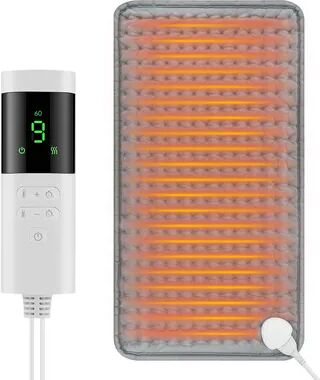
Combo Retail Shop Electric Heating Pad, Body Warming Thermal Mat, Constant Temp, Timer, Abdomen Hand Thermal Mat us Plug 100 130vExperience ultimate warmth and comfort with our Electric Heating Pad Pet Heat Mat with 9 Levels, designed for personal and pet use. This Body Warming Thermal Mat ensures your hands, abdomen, and pets stay cozy even during the coldest days. Equipped...31,97 $*Shipping: 0,00 $Secure redirect to the provider
-
DeLonghi TrueBrew Automatic Drip Coffee Maker with Thermal Carafe, Built-In Grinder, and Bean Extract Technology Stainless SteelThe DeLonghi TrueBrew is an innovative, automatic coffee machine that brews drip coffee from fresh, whole coffee beans, all at the touch of a button. TrueBrew is built to suit your coffee needs for consistent, freshly ground coffee every time.699,95 $*Shipping: 0,00 $Secure redirect to the provider
-
How is efficiency related to thermal energy?
Efficiency is related to thermal energy in the context of energy conversion processes. In many systems, thermal energy is used to produce work or electricity. The efficiency of these systems is a measure of how much of the thermal energy input is converted into useful work or electricity. Higher efficiency means that more of the thermal energy is being effectively utilized, while lower efficiency indicates that more of the thermal energy is being wasted as heat. **
-
How is the efficiency related to thermal energy?
Efficiency is related to thermal energy in the context of energy conversion processes. The efficiency of a system or process is a measure of how much useful work or energy output is obtained compared to the total energy input. In the context of thermal energy, the efficiency of a system such as a power plant or an engine is a measure of how effectively it can convert thermal energy into useful work. Higher efficiency means that a greater proportion of the thermal energy input is being converted into useful work, while lower efficiency means that more of the thermal energy is being wasted as heat. Therefore, the relationship between efficiency and thermal energy is crucial in determining the overall performance and effectiveness of energy conversion processes. **
-
What efficiency does a thermal power plant have?
A thermal power plant typically has an efficiency ranging from 30% to 40%. This means that only 30-40% of the energy from the fuel is converted into electricity, while the rest is lost as waste heat. Improving the efficiency of thermal power plants is a key focus for reducing greenhouse gas emissions and increasing energy sustainability. Various technologies and strategies, such as combined heat and power systems, can help increase the efficiency of thermal power plants. **
-
What is the efficiency of a thermal power plant?
The efficiency of a thermal power plant refers to the ratio of the electrical energy output to the heat energy input. It is a measure of how effectively the plant converts heat energy into electrical energy. A higher efficiency means that the plant is able to generate more electricity with the same amount of fuel, resulting in lower fuel consumption and reduced environmental impact. Improving the efficiency of thermal power plants is an important goal for reducing greenhouse gas emissions and increasing energy sustainability. **
Similar search terms for Thermal
-
Redken Thermal Spray 250mlRedken Thermal Spray protects and repairs hair from thermal damage. Key Benefits: Heat protection 230°C 24 hour frizz protection Increased shine Bottle made from recycled plastic (excluding pump and cap) With a lightweight formula, this heat protector protects hair from up to 230°C and is suitable for all hair types. Frizz is reduced and hair is left with a glossy shine for that salon-fresh finish from root to tip. Formulated with Redken’s Heat Re-Style technology, this protecting mist can be applied once and still allow for endless re-styling throughout the day. Ingredients: Aqua / water • Isobutane • Propylene Glycol • Sodium Polystyrene Sulfonate • Carbomer • Triethanolamine • Phenoxyethanol • Peg-40 Hydrogenated castor oil • Parfum / fragrance • Peg-60 Almond Glycerides • Polysorbate 20 • Cocamidopropyl Betaine • Benzophenone-4 • Glyceryl Laurate • Sodium Chloride • Hydroxypropyltrimonium Hydrolyzed Wheat Protein • Glycerin • Alpha-isomethyl Ionone • Xylose • Linalool • Hydroxycitronellal • Hexyl Cinnamal • Citronellol • Sodium Benzoate • Geraniol • Limonene • Benzyl Alcohol • Isoeugenol20,40 £*Shipping: 0,00 £Secure redirect to the provider
-
Testo 871s Thermal Imaging CameraTesto 871s Thermal Imaging Camera (0560 8716) The Testo 871s Thermal Imaging Camera is a professional choice for high-resolution thermography, wireless connectivity and real-time data integration. With an infrared resolution of 240 x 180 pixels (boosted to 480 x 360 with SuperResolution), it captures sharp thermal images, well suited to HVAC, electrical and building diagnostics. The 871s offers a temperature detection range from -30°C to +650°C with thermal sensitivity of 80mK (0.08°C) — higher sensitivity than the 865s and 868s, useful where spotting smaller temperature differences matters, such as preventative maintenance monitoring. It features a 35° x 26° field of view for inspecting large areas quickly, with automatic hot/cold spot detection highlighting problem zones instantly. Via Bluetooth, it pairs with the Testo 770-3 Clamp M2218,80 £*Shipping: 0,00 £Secure redirect to the provider
-
Testo 872s Thermal Imaging CameraTesto 872s Thermal Imaging Camera (0560 8725) The Testo 872s Thermal Imaging Camera delivers industry-leading thermal resolution, precision and smart connectivity, making it a strong tool for HVAC technicians, electricians, industrial engineers and building inspectors. With a high infrared resolution of 320 x 240 pixels (enhanced to 640 x 480 pixels via SuperResolution), the 872s captures ultra-sharp thermal images, allowing precise detection of faults in electrical systems, insulation, machinery and structures. Equipped with an integrated laser marker, the 872s highlights the exact measuring point in real time, making on-site analysis fast, accurate and traceable. With thermal sensitivity of 0.05°C (50mK) and a temperature range from -30°C to +650°C, even the smallest heat differences are visible, useful for preventive maintenance and failure det2448,00 £*Shipping: 0,00 £Secure redirect to the provider
-
How do you calculate the efficiency of thermal energy?
The efficiency of thermal energy can be calculated by dividing the useful output of energy (such as work or electricity) by the total input of energy. This can be expressed as a percentage by multiplying the result by 100. For example, if a power plant converts 40% of the thermal energy from burning coal into electricity, the efficiency of thermal energy conversion would be 40%. This calculation helps to assess how effectively thermal energy is being converted into useful forms of energy. **
-
Can someone help us with solar thermal energy?
Yes, there are professionals and experts in the field of solar thermal energy who can help with various aspects of the technology. These experts can provide guidance on system design, installation, maintenance, and troubleshooting. Additionally, there are many resources available, such as workshops, training programs, and online forums, where individuals can seek assistance and advice on solar thermal energy. Whether it's for residential, commercial, or industrial applications, there are professionals who can help with harnessing the power of solar thermal energy. **
-
Among which thermal pads is thermal paste used?
Thermal paste is typically used between the CPU and the heatsink to improve heat transfer. It is not used with thermal pads, as thermal pads are pre-applied or placed between components where a more solid interface is needed. Thermal paste is a better choice for areas where there are small gaps or uneven surfaces that need to be filled for optimal heat dissipation. **
-
What is the difference between thermal energy and thermal power?
Thermal energy refers to the internal energy present in a system due to the motion and interaction of its particles. It is a measure of the total kinetic and potential energy of the particles in a substance. On the other hand, thermal power refers to the rate at which thermal energy is transferred or converted into other forms of energy, such as mechanical or electrical energy. It is a measure of the amount of thermal energy transferred per unit of time. In summary, thermal energy is the total energy present in a system, while thermal power is the rate at which thermal energy is transferred or converted. **
* All prices are inclusive of VAT and, if applicable, plus shipping costs. The offer information is based on the details provided by the respective shop and is updated through automated processes. Real-time updates do not occur, so deviations can occur in individual cases. ** Note: Parts of this content were created by AI.